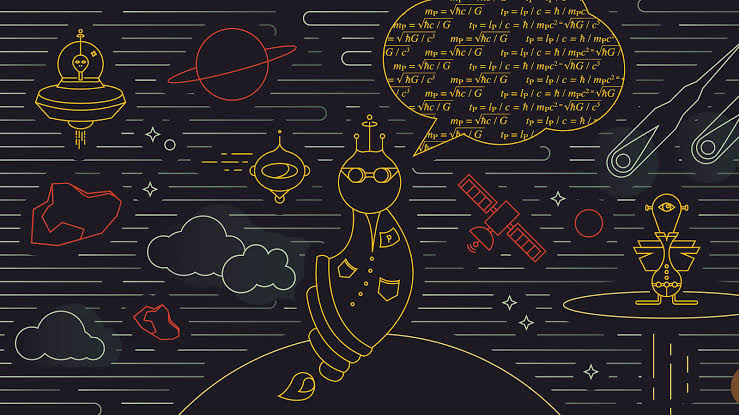
The Planck scale is the realm of extremely high energies and incredibly small distances, where the effects of both quantum mechanics and general relativity become significant.
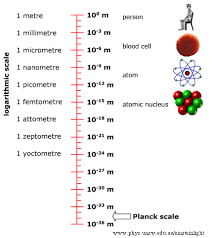
It’s named after Max Planck, who first proposed fundamental constants like the Planck length (~1.616 × 10⁻³⁵ meters), Planck time (~5.391 × 10⁻⁴⁴ seconds), and Planck energy (~1.22 × 10¹⁹ GeV). These constants are key to understanding phenomena where quantum gravity is expected to dominate.
Challenges in Reaching the Planck Scale
Currently, conducting experiments directly at the Planck scale is far beyond the capabilities of modern technology.
To reach the Planck energy, for instance, an accelerator like the Large Hadron Collider (LHC) would need to be scaled up by many orders of magnitude.
The energies involved (around 10¹⁹ GeV) are so extreme that they exceed anything we can generate in particle colliders by about 15 orders of magnitude.

Indirect Probes and Theoretical Models
Even though we can’t directly experiment at the Planck scale, researchers explore its implications in several ways:
- Cosmology: The early universe, especially during the first moments after the Big Bang, approached conditions near the Planck scale.
- Studying the cosmic microwave background (CMB) and the distribution of galaxies helps researchers infer the physics of this period.
- Gravitational waves from the early universe might also carry signatures from near-Planckian processes.
- High-Energy Physics: Though current particle accelerators can’t reach Planck-scale energies, they can probe phenomena that might reveal new physics beyond the Standard Model, which could be linked to quantum gravity theories like string theory or loop quantum gravity.
- Some theories propose that certain observable phenomena at lower energies might be “footprints” of Planck-scale physics.
- Black Holes: The event horizon and singularities inside black holes represent regions where both quantum mechanics and gravity are expected to interact at Planckian scales.
- Investigating black hole evaporation via Hawking radiation could reveal insights into quantum gravity.
- Quantum Gravity Theories: String theory, loop quantum gravity, and other approaches like causal dynamical triangulations and non-commutative geometry are theoretical frameworks that attempt to describe the Planck scale.
- These theories propose how spacetime might behave at this extreme scale, and researchers are constantly trying to find indirect observational signatures or experiments that could validate them.
Tabletop Experiments (e.g., Testing the Foundations)
Researchers have devised innovative experiments to indirectly explore Planck-scale physics or quantum gravity. These include:
- Precision tests of general relativity: Even tiny deviations from general relativity at larger, observable scales may indicate quantum gravitational effects.
- Tests of Lorentz invariance violation: Some quantum gravity theories predict that the speed of light might vary slightly with energy at Planck scales, leading to observable consequences for cosmic rays or gamma rays.
- Optical lattice clocks and interferometry: These tools offer unprecedented precision in measuring time and distance, potentially revealing deviations from classical physics that might arise from quantum gravity effects.

Conclusion
While experiments directly probing the Planck scale are currently impossible due to technological limits, researchers continue to explore theoretical models and perform precision experiments that could shed light on Planck-scale physics.
The merger of general relativity and quantum mechanics remains one of the most significant challenges in modern physics.