Sources of energy can be broadly categorized into renewable and non-renewable sources:
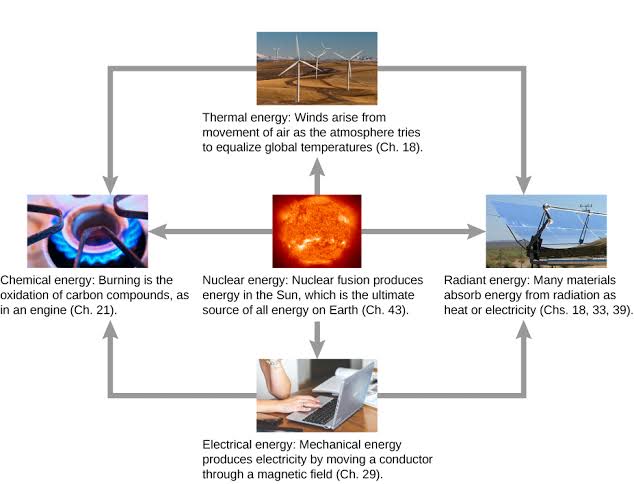
- Renewable Energy Sources:
- Solar Energy: Harnessed from the sun using solar panels or solar thermal systems.
- Wind Energy: Generated from wind turbines that convert wind motion into electricity.

- Hydropower: Produced from the movement of water, typically through dams or flowing rivers.
- Geothermal Energy: Derived from heat stored beneath the Earth’s surface.
- Biomass: Comes from organic materials like wood, agricultural crops, and waste, which can be burned or converted into biofuels.
- Non-Renewable Energy Sources:

- Fossil Fuels: Includes coal, oil, and natural gas, formed from ancient organic matter and used primarily for electricity generation and transportation.
- Nuclear Energy: Produced through nuclear fission in reactors, where the splitting of atomic nuclei releases energy.
Each energy source has its own advantages and challenges, influencing its role in the global energy landscape.