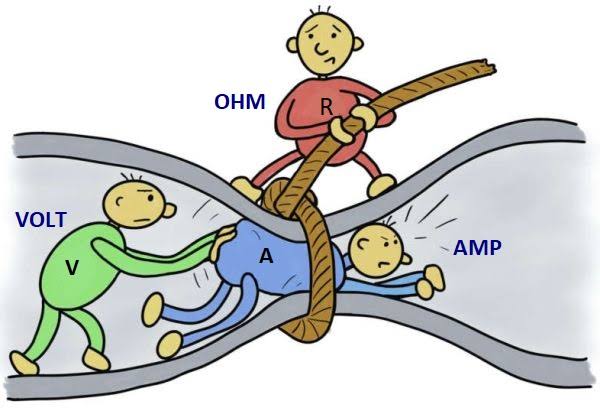
Ohm’s Law is a fundamental principle in electronics and electrical engineering, relating voltage, current, and resistance in an electrical circuit. The law is typically expressed with the formula:
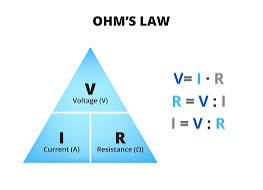
[ V = I \times R ]
where:
- ( V ) is the voltage (in volts, V),
- ( I ) is the current (in amperes, A),
- ( R ) is the resistance (in ohms, Ω).

Resistance is a measure of how much a component or material opposes the flow of electric current. It is determined by the material’s properties, dimensions, and temperature. The formula to calculate resistance using Ohm’s Law is:
[ R = \frac{V}{I} ]
Where:
- ( R ) is resistance,
- ( V ) is voltage across the component,
- ( I ) is the current flowing through it.
Understanding Ohm’s Law and how resistance works is crucial for designing and analyzing electrical circuits.