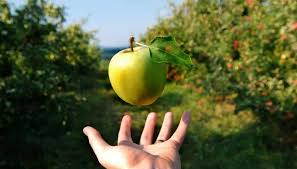
Gravity is a fundamental force of nature that causes objects with mass to be attracted toward one another. It’s responsible for keeping planets in orbit around the sun, causing objects to fall to the ground, and giving weight to physical objects. The force of gravity acts between all masses and is always attractive.

Key Concepts in Gravity
- Newton’s Law of Universal Gravitation: Isaac Newton formulated the law of universal gravitation, which states that every point mass attracts every other point mass with a force that is proportional to the product of their masses and inversely proportional to the square of the distance between their centers. The formula is:F=Gm1m2r2F = G \frac{m_1 m_2}{r^2}F=Gr2m1m2Where:
- FFF is the gravitational force between two objects,
- GGG is the gravitational constant (6.67430×10⁻¹¹ m3kg−1s−26.67430 \times 10^{-11} \ \text{m}^3 \text{kg}^{-1} \text{s}^{-2}6.67430×10⁻¹¹ m3kg−1s−2),
- m1m_1m1 and m2m_2m2 are the masses of the objects,
- rrr is the distance between the centers of the two masses.
- Gravitational Acceleration: On the surface of the Earth, all objects experience a gravitational acceleration denoted by ggg. The average value of ggg is approximately 9.81 m/s29.81 \ \text{m/s}^29.81 m/s2. This means that, in the absence of air resistance, an object in free fall will accelerate towards the Earth’s surface at this rate.
- Weight and Mass:
- Mass is a measure of the amount of matter in an object and is constant regardless of location.
- Weight is the force exerted by gravity on an object. It can be calculated as:
- Gravitational Potential Energy: An object in a gravitational field has potential energy due to its position. For an object near the Earth’s surface, the gravitational potential energy (U) can be calculated as:U=mghU = mghU=mghWhere mmm is the mass of the object, ggg is the gravitational acceleration, and hhh is the height above the reference point.
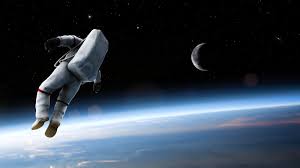
- General Relativity and Gravity: Albert Einstein’s theory of general relativity provides a more comprehensive understanding of gravity. It describes gravity not as a force but as a curvature of spacetime caused by mass and energy. Massive objects cause spacetime to curve, and this curvature directs the motion of objects, appearing as the force of gravity.
Applications and Effects
- Planetary Orbits: Gravity governs the motion of planets, moons, and other celestial bodies, keeping them in orbit.
- Tides: The gravitational pull of the moon and the sun on Earth’s oceans causes tides.
- Gravitational Waves: Ripples in spacetime caused by accelerating masses, such as merging black holes.
Gravity is a crucial force in the universe, influencing the motion of celestial bodies, the structure of the universe, and even the passage of time.